
Relocation in London starts with a map, but the commute decides it
When planning a relocation activity, many turn to neighbourhood guides and price comparisons, overlooking the inevitable habitual pattern of the daily commute: each week, in the rain, on a busy tube line, with little margin for delays. Most route planning applications offer the “fastest route” but this is often insufficient for wellbeing, and a commute that is slightly longer but calmer can feel easier to live with across a multi-day office week. This post compares a classic London decision: Where is the optimal relocation location, Zone 2, Zone 4 or the commuter belt for two office locations in London? Leveraging PlanHalo's search functionality we consider the implication of each location for office locations at King's Cross and London Bridge.
Quick verdict: best overall, calmest, fastest (at 09:00 arrive-by)
For both destinations in this comparison, Islington (Zone 2) comes out as the best overall option. Walthamstow and Sevenoaks compete differently depending on destination, with notable differences in time, calm score, cost, and reliability.
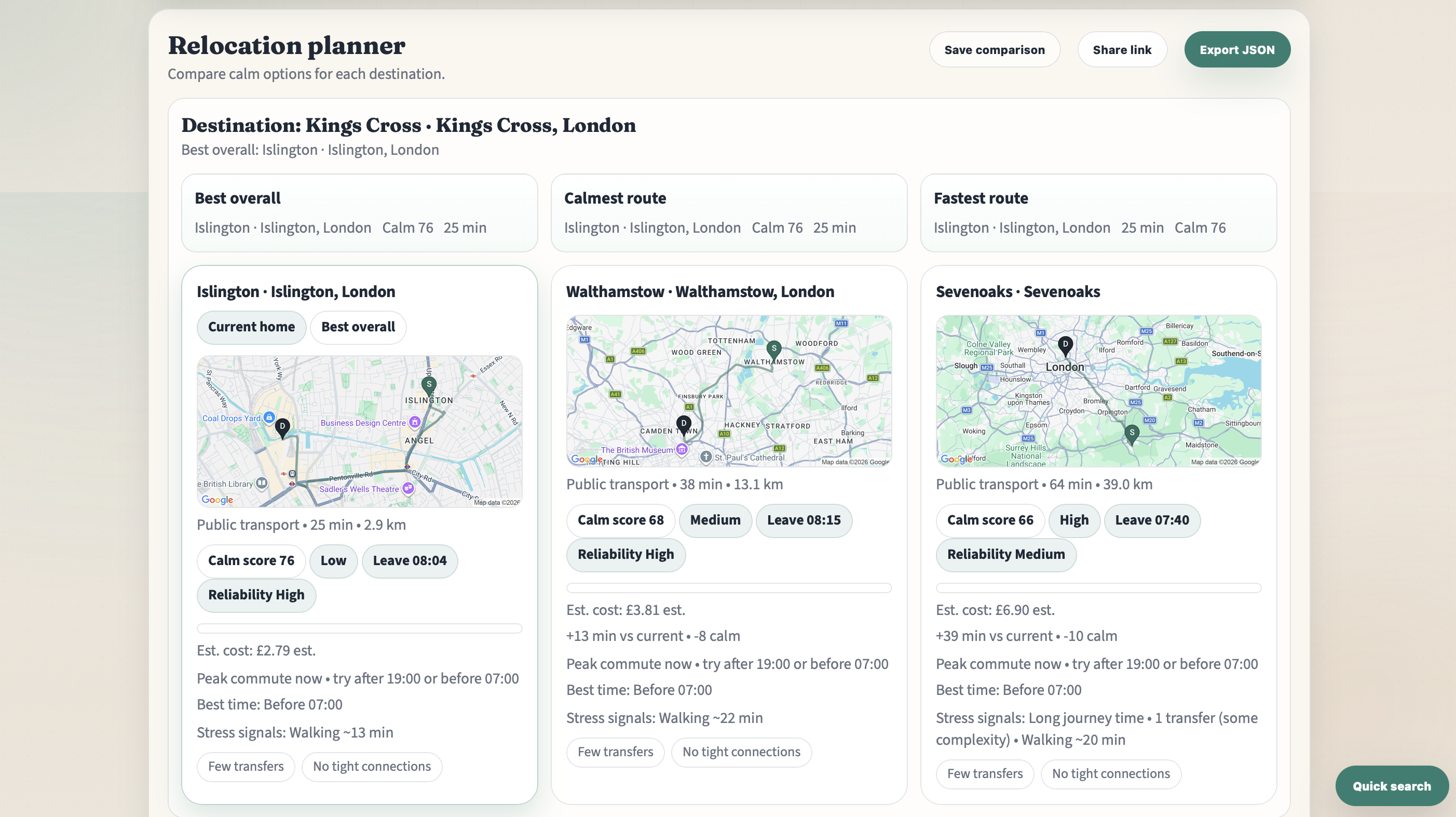
- King's Cross (09:00 arrival): Best overall home residency location is Islington (25 min, Calm 76). Walthamstow adds +13 min and drops to Calm 68, and Sevenoaks adds +39 min and drops to Calm 66.
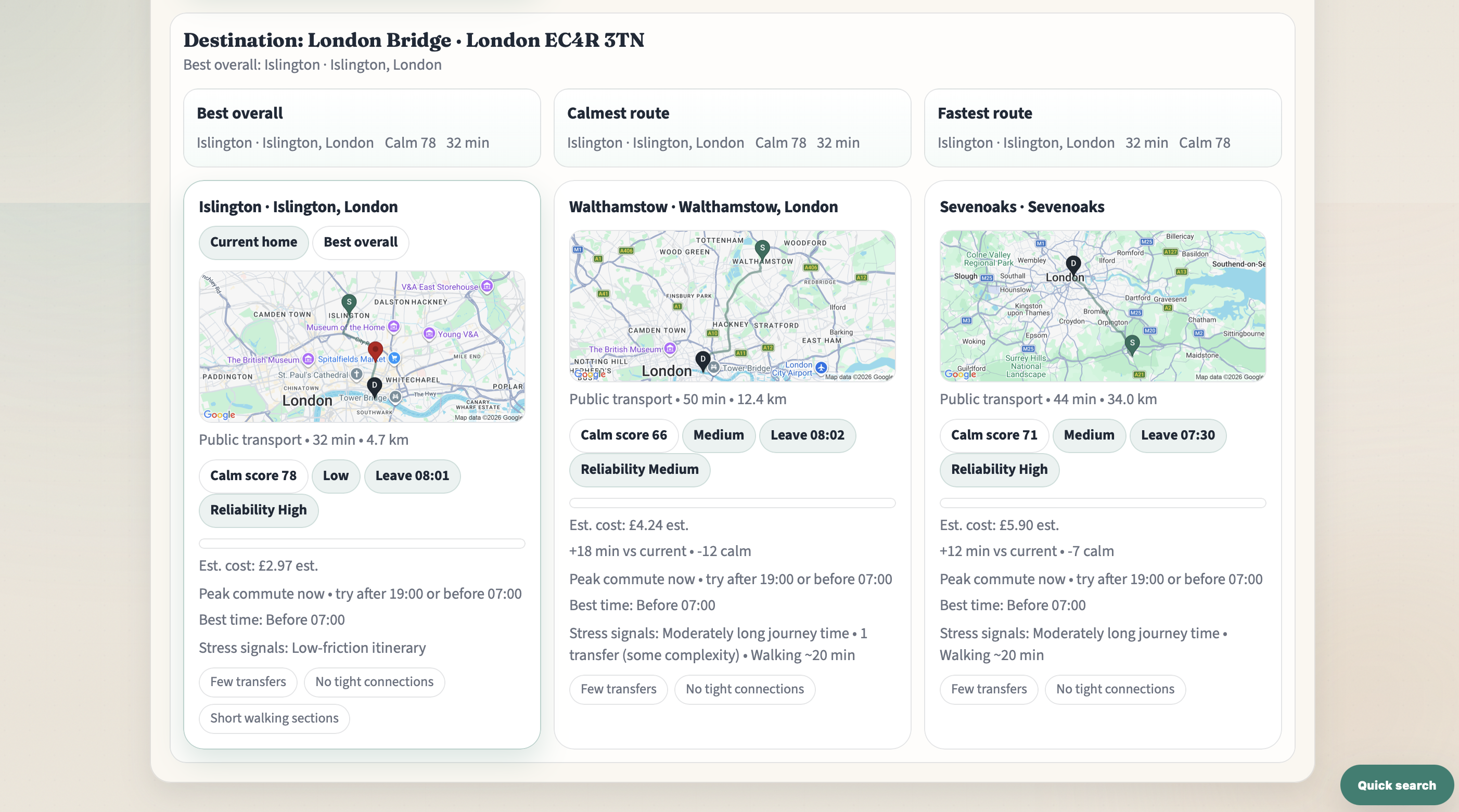
- London Bridge (09:00 arrival): Best overall = Islington (32 min, Calm 78). Walthamstow adds +18 min and drops to Calm 66, Sevenoaks adds +12 min and lands at Calm 71.
- Headline pattern: Zone 2 wins on simplicity and a less stressful commute, closely followed by Zone 4 with slightly longer travel times, and finally the commuter belt which is highly destination dependent. PlanHalo presents the evidence with a clear comparison so that you can make informed decisions.
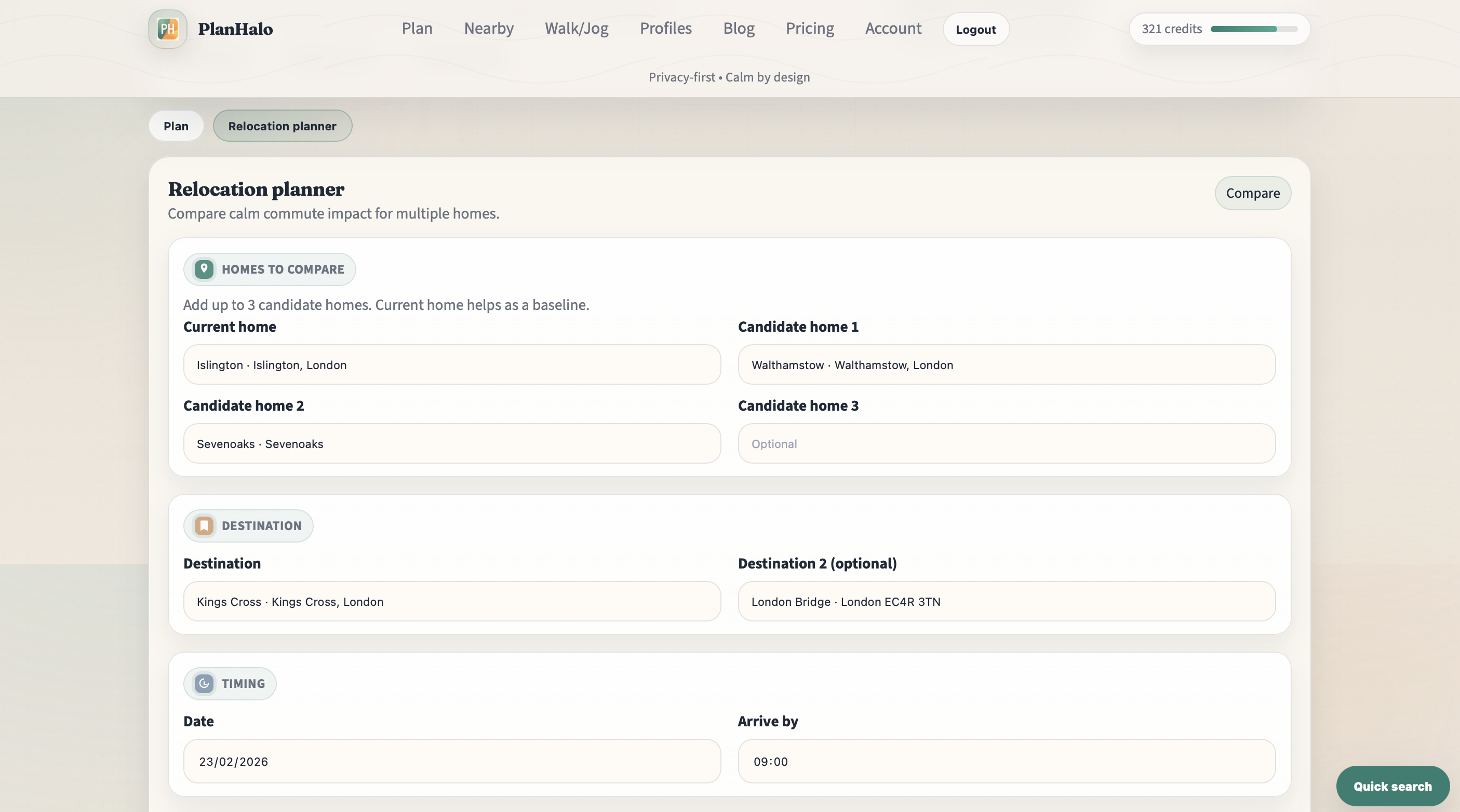
The relocation search setup
The following walks through the relocation search setup: one central option, one outer-zone option, and one commuter belt town:-
Homes: Islington (Zone 1-2), Walthamstow (Zone 3-4), Sevenoaks (commuter belt).
Destinations: King's Cross Station and London Bridge Station.
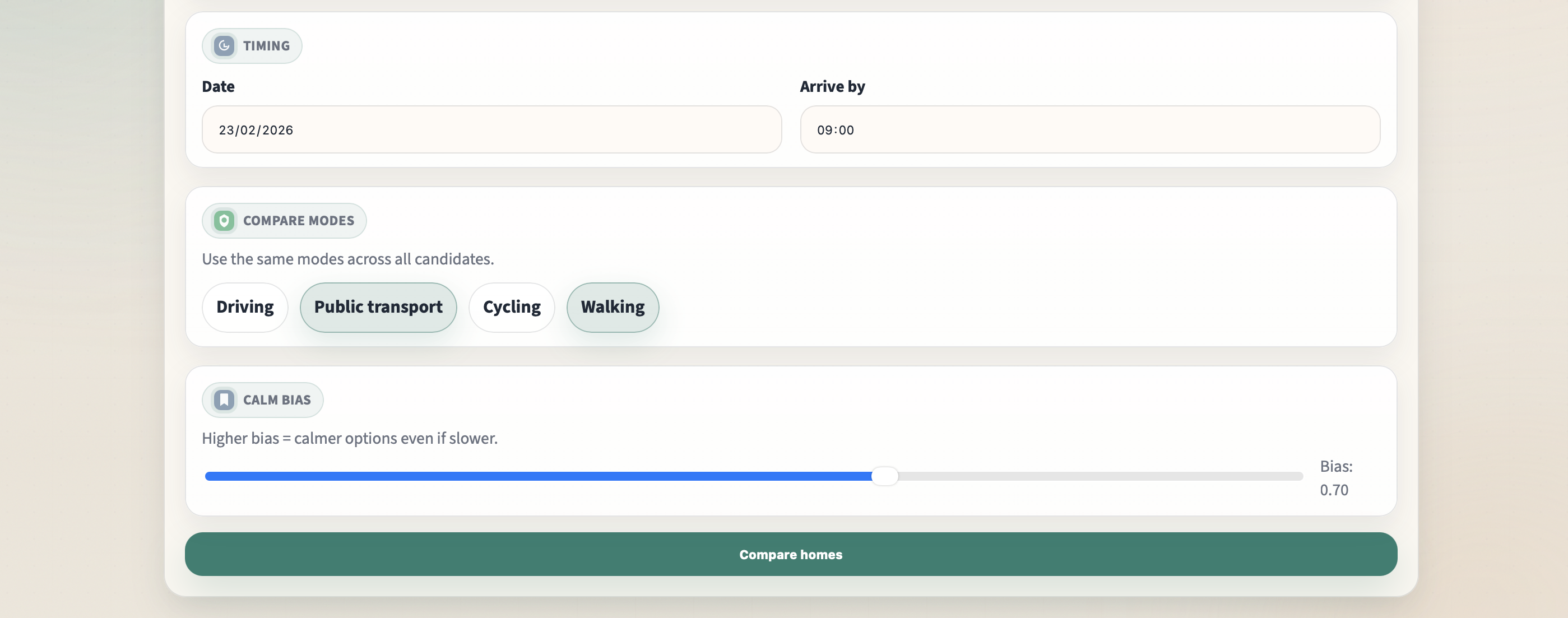
Inputs used here are a reference date of 23/02/2026, an arrive-by time of 09:00, public transport and walking selected as the key modes of transport to consider, and a calm bias set to 0.70 (higher bias favours calmer options even at the sacrifice of a longer commute). The same structure would work for any location (office or school).
Why Zone 2 vs Zone 4 vs commuter belt is the real London relocation decision
Some of the considerations made when considering a relocation are commute time, stress from the journey, and space at the residency for a set budget. Zones 1-4 offer reasonable commute options with more paths for a calmer journey, however, commuter belt towns typically offer more space (and school options) at the sacrifice of more stressful and longer commutes. What is stressful or acceptable will be subjective and vary from person to person.
PlanHalo adds a calmer-vs-faster view of the same journeys, which helps surface the difference between a commute that is technically possible and one that stays liveable across months so that you can make the best-informed decision on what works for you.
- Zone 1-2 examples: Islington, Highbury, Hackney, London Fields
- Zone 3-4 examples: Walthamstow, Leyton, Wanstead
- Commuter belt examples: Sevenoaks, Guildford, St Albans
PlanHalo results for King's Cross: time, calm score, cost, reliability
For King's Cross, Islington is the standout: it is both the best overall option and the calmest route in this comparison.
Islington → King's Cross: PlanHalo identifies an optimal calm route that uses public transport (2.9 km) with a total journey time of 25 min. This option receives a Calm score of 76, a compounded score that considers the reliability of the route, the cost and transfers along the.
For the King's Cross destination, the commuter belt option is not just a longer journey but one that is meaningfully heavier for a day’s commute, with earlier departure times and more stress signals across the journey. Walthamstow remains viable with the time and calm commute trade-off for space and price.
PlanHalo results for London Bridge: when the commuter belt can compete
London Bridge produces a different pattern. Islington still wins overall, but Sevenoaks becomes comparatively more competitive than it is for King's Cross.
The commuter belt option remains an earlier start, but it is more attractive in this example as an option, to the outer-zone locations when considering travel time, with a better Calm score than Walthamstow.
How to choose between Zone 2, Zone 4, and commuter belt
Zone 2 (Islington-style) tends to suit roles with frequent office days, late finishes, or irregular meetings, because it reduces daily friction and preserves flexibility.
Zone 4-ish (Walthamstow-style) tends to suit people prioritising space and value, while accepting a longer commute and more walking time on some routes.
Commuter belt towns (Sevenoaks-style) will likely suit those who want the lifestyle trade and are comfortable with earlier starts and higher travel costs. Of course, results can vary significantly by destination, as we have found for the above examples, so it is worth leveraging PlanHalo to create multiple reports.
- If the office hub is King's Cross: the commuter belt load in this comparison is substantial (64 min, Calm 66, leave ~07:40).
- If the office hub is London Bridge: the commuter belt option becomes more competitive (44 min, Calm 71, leave ~07:30).
- If reliability matters most: Islington shows High reliability for both destinations; Sevenoaks shows Medium (King's Cross) and High (London Bridge).
Why PlanHalo beats a basic commute search for relocation in London
A standard commute search usually answers: “What is fastest right now from A to B?” Relocation needs a different answer: “Which home choice is sustainable and optimal for an easy life”. PlanHalo supports you in making that choice by offering a service to compare multiple homes and multiple destinations in one view, surfacing a meaningful Calm Score, emphasising stress signals, and quantifying route reliability (not just duration).
FAQ: relocation in London and commuting (Zone 2, Zone 4, commuter belt)
These are the questions that typically appear when people search for the best places to live in London, and how PlanHalo can provide a more meaningful search experience.
- Is Zone 4 too far to commute to central London? Zone 4 can work well, but the experience often depends on walking time, transfers, and peak crowding. In this comparison, Walthamstow is viable to both hubs, but notably longer than Zone 2 (38 min to King’s Cross; 50 min to London Bridge).
- Is Sevenoaks a good commuter town for London Bridge? In this comparison, Sevenoaks performs better for London Bridge (44 min, Calm 71, High reliability) than it does for King’s Cross (64 min, Calm 66, Medium reliability).
- What’s the best London zone for commuting three days a week? For frequent office days, central options often remain easiest to sustain because they reduce total commute load and preserve flexibility around meetings and late finishes. In this comparison, Islington is best overall to both destinations.
- What matters more than commute time when relocating? Predictability, reliability, walking load, and the number of transfers often determine how a commute feels over months. Those factors show up in calm score and stress signals.
- Does destination choice change the best place to live? Yes. The same home can feel very different depending on the office hub. Sevenoaks is the clearest example here: much heavier for King’s Cross, noticeably better for London Bridge.
Planning to relocate?
Running a search is very simple, select up to two office hub locations, add up to four home locations, set an arrive-by time that matches your needs, and adjust the calm bias to match the commute experience that feels acceptable for you.